
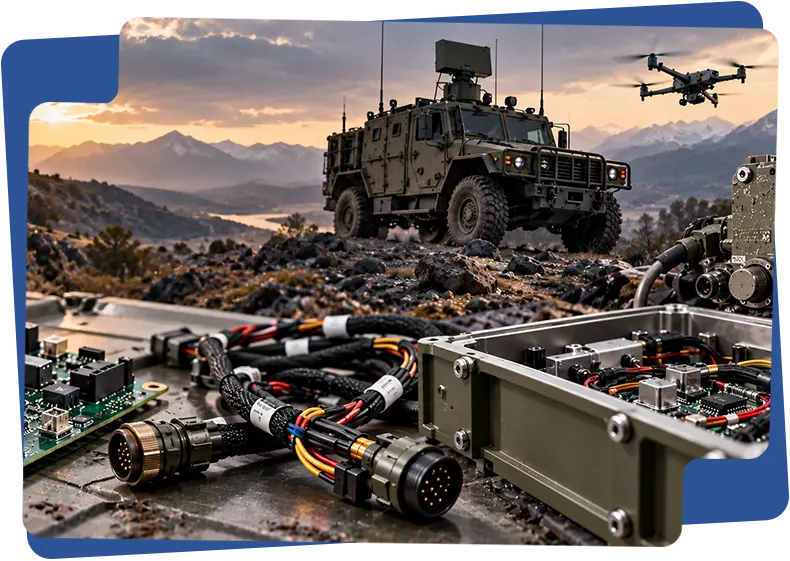
Defence Electronics Manufacturing: Building Reliability for Demanding Environments
Defence electronics operate in some of the most demanding environments. From exposure to dust and heavy rain to extreme temperatures, shock and continuous vibration, these systems may be required to perform reliably under conditions that challenge conventional electronic equipment.
Applications such as communication systems, surveillance equipment, navigation electronics, control systems and power management units depend on electronic assemblies that meet stringent product-specific requirements.
Achieving this reliability requires more than advanced electronic design. The manufacturing processes behind these systems, including PCB assembly, cable and wiring harness integration, enclosure assembly and testing, play an important role in the quality and consistency of the finished product.
The Growing Importance of Electronics in Defence Applications
Modern defence platforms increasingly depend on electronic systems for communication, monitoring, control, data processing and power management.
These applications can involve complex assemblies that combine printed circuit boards, electrical interconnections, connectors, power components and mechanical enclosures.
As system complexity increases, manufacturers must coordinate multiple assembly processes while maintaining consistent quality and meeting the specifications defined for each application.
For OEMs and defence equipment manufacturers, selecting an electronics manufacturing partner with the appropriate technical capabilities and quality processes is an important part of production planning.
Why Defence Electronics Manufacturing Demands Precision
Electronic assemblies intended for demanding environments must be manufactured with careful attention to component quality, assembly processes, electrical connections and product integration.
1. Reliable Printed Circuit Board Assembly (PCBA)
Printed circuit board assemblies form the foundation of many defence electronic systems. They support processing, communication, sensing, control and power-related functions.
Component placement, soldering quality, inspection and process control are important to achieving consistent assembly quality. Depending on the application, manufacturers may also need to address thermal considerations, component suitability and environmental protection requirements.
2. Robust Cable and Wiring Harness Assemblies
Wiring harnesses and cable assemblies connect electronic modules, control units, power supplies and other system components.
In demanding applications, connector selection, termination quality, wire specifications, routing and mechanical protection require careful consideration. These factors can influence electrical continuity, maintainability and the ability of an assembly to meet its intended operating requirements.
3. Connectors and Electrical Interconnections
Connectors provide critical interfaces between electronic assemblies and other equipment.
Incorrect component selection, poor termination or inconsistent assembly can compromise the performance of the overall system. Manufacturing processes must therefore follow the relevant drawings, approved components and application-specific requirements.
4. Enclosure and Box-Build Integration
Electronic components must be integrated into a complete assembly that suits the intended application.
Box-build manufacturing can bring together PCBAs, wiring harnesses, connectors, power components and mechanical enclosures within a coordinated assembly process.
Depending on the product specification, integration may also involve thermal-management components, protective features and mechanical interfaces. These requirements must be defined and validated for the intended operating environment.
5. Inspection and Testing
Testing and inspection help verify that manufactured assemblies conform to applicable requirements.
Depending on the product, manufacturing quality activities may include visual inspection, electrical testing, in-circuit testing, functional testing and other specified verification procedures.
Environmental qualification, vibration testing, ingress protection validation and temperature testing may also be required for particular products. These activities must be performed using suitable procedures and facilities, with the scope determined by the applicable specifications.
Manufacturing Consistency and Quality Management
For defence-related electronics, quality must be addressed throughout the manufacturing process rather than only at final inspection.
Important considerations include:
- Process control: Following documented assembly procedures and approved manufacturing instructions.
- Component traceability: Maintaining appropriate records of components, materials and production batches.
- Configuration control: Ensuring that assemblies are manufactured to the correct revision of drawings, bills of materials and specifications.
- Inspection discipline: Applying defined inspection criteria at relevant manufacturing stages.
- Testing and verification: Confirming conformance to the tests and acceptance criteria specified for the product.
- Supply-chain management: Managing component availability, approved sourcing and material consistency.
The specific standards, qualifications, security controls and environmental requirements vary according to the equipment, customer and intended application. Manufacturers should establish these requirements before production begins.
The Role of an Integrated Electronics Manufacturing Partner
Complex electronic products often require coordination between several manufacturing disciplines.
Managing PCB assembly, cable production, electrical interconnections and final integration across separate suppliers can introduce additional coordination requirements for OEMs.
An integrated electronics manufacturing services (EMS) partner can help coordinate these activities within a connected manufacturing workflow, subject to the required technical scope and qualifications.
This approach can support improved production coordination, consistent assembly processes and a clearer view of manufacturing quality across the product’s assembly stages.
For defence equipment manufacturers, the important consideration is whether the manufacturing partner’s capabilities, quality systems, facilities and approvals align with the specific requirements of the intended application.
How inYantra Supports Complex Electronic Assemblies
At inYantra Technologies, our manufacturing capabilities include printed circuit board assembly (PCBA), cable and wiring harness assembly and box-build assembly.
These capabilities support the assembly and integration requirements of complex electronic products across industrial and other demanding applications, subject to product-specific requirements.
Our manufacturing scope can bring together electronic assemblies, electrical interconnections and enclosure-level integration to support OEMs seeking coordinated manufacturing services.
For defence-related applications, requirements such as environmental qualification, specialized testing, defence-specific approvals, security controls and customer-mandated standards must be assessed individually before a project is undertaken. Capabilities and compliance should be confirmed against the applicable program requirements.
Building Reliability Before Equipment Reaches the Field
Defence electronics depend on the combined performance of their components, electrical connections, assembly processes and integrated systems.
Reliable manufacturing requires attention to detail at every stage, from PCB assembly and wiring harness integration to enclosure assembly, inspection and testing.
As electronic systems become more complex, manufacturing consistency and process discipline remain important to delivering products that meet their defined performance and quality requirements.
At inYantra, our PCBA, cable and wiring harness assembly and box-build capabilities support the manufacturing and integration of complex electronic products.
Looking for an electronics manufacturing partner for demanding applications? Contact inYantra to discuss your manufacturing requirements.