
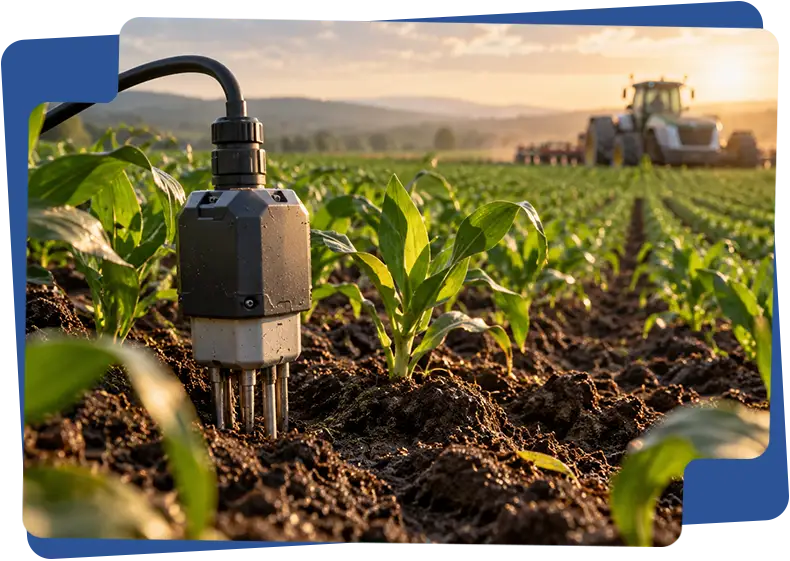
Smart Agriculture Needs More Than Smart Sensors: The Role of Electronics Manufacturing
Agriculture is becoming increasingly connected. Soil moisture sensors, environmental monitoring devices, precision farming equipment and automated irrigation systems are helping transform how agricultural operations are monitored and managed.
These technologies depend on reliable electronics to collect data, communicate information and support consistent operation in real-world conditions.
However, building connected agricultural products involves more than integrating sensors and communication modules. The electronics inside these devices must be assembled, interconnected and integrated to meet the demands of agricultural environments.
This is where electronics manufacturing plays an important role in the development of modern agricultural technology.
The Growing Role of Electronics in Smart Agriculture
Smart agriculture combines sensing technologies, connectivity, automation and data-driven monitoring to support more informed agricultural operations.
Electronic systems are increasingly used in applications such as:
- Soil and environmental monitoring: Electronic assemblies that support the measurement of soil moisture, temperature, humidity and other environmental parameters.
- Precision farming equipment: Electronic control systems that enable monitoring and control functions in agricultural machinery and equipment.
- Automated irrigation systems: Electronic controllers and connected modules that support automated water management.
- Connected agricultural devices: Communication-enabled electronic products that transmit field data to monitoring platforms and control systems.
- Agricultural monitoring infrastructure: Integrated electronic equipment used to collect, process and communicate information across agricultural operations.
As these applications evolve, manufacturers need dependable electronics assemblies that can be integrated into complete products and manufactured consistently at scale.
Why Agricultural Electronics Need Reliable Manufacturing
Unlike electronics used exclusively in controlled indoor environments, agricultural equipment may be exposed to dust, moisture, temperature variations, vibration and prolonged outdoor operation.
These conditions make manufacturing quality, assembly consistency and product integration particularly important.
1. Reliable Printed Circuit Board Assemblies
Printed circuit board assemblies (PCBAs) form the electronic foundation of many connected agricultural products. They support sensing, signal processing, communication and control functions.
Consistent component placement, soldering quality and inspection processes help support the reliability of these assemblies. Depending on the application, manufacturers may also need to consider environmental protection, thermal management and the requirements of the final product enclosure.
2. Dependable Cable and Wiring Harness Assemblies
Sensors, controllers, power supplies and communication modules need reliable electrical connections to function together.
Cable and wiring harness assemblies provide these connections within agricultural equipment and monitoring systems. Connector selection, wire specifications, routing, termination quality and mechanical protection are important considerations when assemblies must operate in demanding environments.
3. Integrated Box-Build Assembly
A functional electronic assembly is only one part of a finished agricultural product.
Box-build assembly brings together PCBAs, cables, connectors, power components, mechanical enclosures and other required elements into an integrated unit.
For OEMs, this approach can simplify the manufacturing process by consolidating multiple assembly requirements within a coordinated production workflow. The scope of integration depends on the product design and the manufacturer’s capabilities.
From Electronic Assemblies to Production-Ready Products
For agricultural technology OEMs, moving from an electronic design to a manufacturable product requires coordination across several production activities.
These can include component sourcing, PCB assembly, cable and wiring harness integration, enclosure assembly, inspection and application-specific testing.
An integrated electronics manufacturing services (EMS) partner can support these activities through coordinated manufacturing processes, helping OEMs manage the transition from individual electronic assemblies to complete products.
Manufacturing consistency also becomes increasingly important as demand grows. Processes that work for initial production quantities must be capable of supporting repeatable output, appropriate quality controls and the production requirements of the customer.
Choosing the Right Electronics Manufacturing Partner for AgriTech
When evaluating an EMS partner for agricultural technology products, OEMs should consider more than assembly capacity alone.
Important evaluation criteria include:
- Manufacturing capabilities: The ability to support PCBA, cable and wiring harness assemblies and box-build integration as required.
- Quality management: Defined inspection procedures, process controls and appropriate testing throughout production.
- Environmental requirements: An understanding of the product’s intended operating conditions and the manufacturing requirements needed to support them.
- Component and supply-chain management: Processes for sourcing components, managing availability and maintaining production continuity.
- Production scalability: The ability to support changing volumes while maintaining manufacturing consistency.
- Integration capabilities: Coordination between electronic, electrical and mechanical assembly activities.
The right manufacturing partner can help OEMs establish a more coordinated production process while allowing their engineering and product teams to focus on developing agricultural technology for their target applications.
How inYantra Supports Connected Agricultural Technology
At inYantra Technologies, our electronics manufacturing capabilities span printed circuit board assembly (PCBA), cable and wiring harness assembly and box-build assembly.
These capabilities can support OEMs developing connected agricultural products, including sensor-based equipment, monitoring systems, electronic controllers and other connected farming devices, subject to product-specific requirements.
By supporting electronic assemblies and their integration into larger systems, inYantra helps customers address manufacturing requirements across different stages of product assembly.
Our focus is on manufacturing execution, assembly quality and the integration of electronic and electrical components into products according to customer specifications.
For agricultural technology companies looking to establish or scale electronics production, these capabilities provide a foundation for evaluating an integrated EMS manufacturing approach.
Building the Electronics Behind the Future of Agriculture
Smart agriculture depends on the effective integration of sensing, connectivity, control and automation. But the performance of these technologies also depends on the quality and consistency of the electronics behind them.
Reliable PCB assemblies, dependable wiring connections and well-integrated electronic systems are essential considerations when translating agricultural technology concepts into manufactured products.
As connected farming continues to evolve, electronics manufacturing will remain an important part of bringing these technologies to market.
At inYantra, we support the electronics manufacturing requirements behind connected products through PCBA, cable and wiring harness assembly and box-build integration.
Looking to manufacture electronics for agricultural sensors, monitoring systems or connected farming equipment? Contact inYantra to discuss your manufacturing requirements.